
BreakoutBulletin | AI Semiconductor Supply Chain Series, Part 2 of 3
Part 1 of this series covered Photronics and the patterning layer, where AI memory exposure arrives indirectly through design activity. Axcelis is the opposite case. Ion implantation is a front-end wafer fabrication step that scales with memory capacity itself, and the company's own reporting now names DRAM and HBM as the demand drivers. Of the three suppliers in this series, this is the one where the memory cycle appears most directly in the numbers.
What Ion Implantation Is and Why It Resists Competition
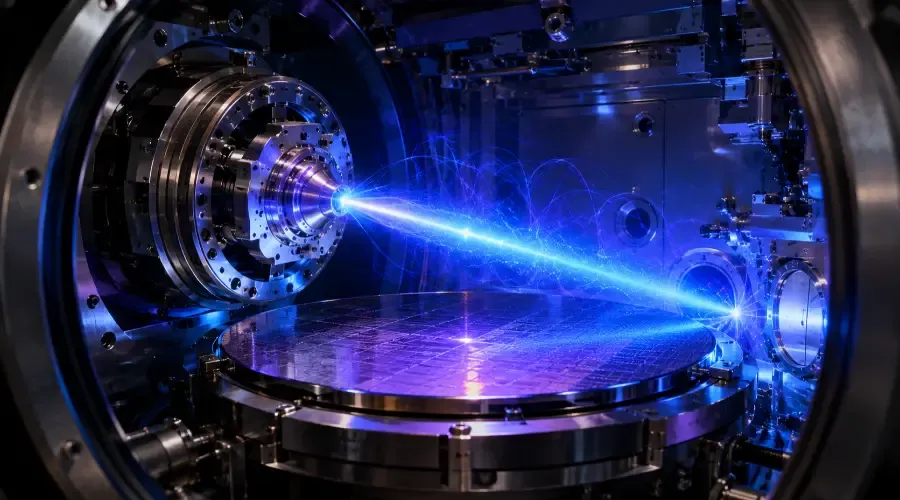
Ion implanters embed dopant atoms into silicon wafers with precise energy and dose control, defining the electrical properties of transistors. Every logic chip, every DRAM die, and every power semiconductor passes through implant steps. The equipment layer has two properties that build moats without requiring monopoly:
First, technical depth. Implant recipes are tuned per customer, per node, per device, and qualification of a new tool at a fab is a long, expensive process that customers avoid repeating. Once an implanter is qualified into a flow, displacement requires a rival to be meaningfully better, not marginally cheaper.
Second, the installed base annuity. Axcelis calls this CS&I (customer solutions and installed base), covering service, upgrades, and consumables across a fleet that keeps running through capex droughts. Management has explicitly framed CS&I as a strategic driver across cycles, and in the most recent quarter it was one of the two named strengths. Equipment companies with large service tails behave differently from pure tool sellers: revenue troughs are shallower, and the customer relationship persists between purchase cycles.
The Memory Acceleration in the Actual Numbers
First quarter 2026 results (reported May 7): revenue of $199.0 million against $192.6 million a year earlier, non-GAAP gross margin of 40.7%, non-GAAP EPS of $0.72 versus a $0.68 consensus. The headline beat is modest. The composition is the story. CEO Russell Low's commentary singled out "meaningful acceleration in Memory," with DRAM and HBM described as a clear highlight showing strong sequential growth that builds on momentum from late 2025.
The honest counterweight sits one line down in the same release. Full-year 2026 revenue is guided roughly flat versus 2025, because the memory growth is being offset by continued digestion of capacity in the Power and General Mature segments, the silicon carbide and older-node markets that drove the prior cycle. EPS of $0.72 also compares against $1.04 in the year-ago quarter, a reminder that the company is climbing out of a trough, not extending a peak. Management pointed to encouraging Q1 bookings and broad customer engagement as the basis for expecting momentum to build exiting 2026 into 2027.
The structure of this setup is worth stating plainly: one segment (memory) inflecting upward inside a company whose aggregate guidance is flat. Historically, that configuration resolves in one of two ways. Either the inflecting segment grows into the dominant driver and the aggregate follows with a lag, or the declining segments deteriorate faster than the growth segment compounds. The quarterly memory revenue disclosure is the single series that distinguishes the two paths.
The Variable Nobody Should Ignore: The Veeco Merger
Axcelis is in the process of merging with Veeco Instruments, with the transaction progressing toward an expected second-half 2026 close. This changes the analytical frame entirely. A standalone implant thesis becomes a combined-company thesis spanning additional equipment categories, with integration execution, deal terms, and combined balance sheet all entering the picture. Any position analysis on ACLS between now and close is analysis of a company in transition, and the merger timeline itself becomes a catalyst calendar: regulatory milestones, shareholder votes, and closing conditions can move the stock independently of fundamentals.
Two analysts have published targets in recent months with a median near $95, and insider activity over the past six months has been sales-only, including small CEO sales. Insider selling during a merger process and after a trough recovery is common enough that it carries limited signal, but the absence of any insider buying is a data point a full analysis records rather than explains away.
Risk Matrix
| Risk | What the Data Currently Shows |
|---|---|
| Capex cyclicality | Power and General Mature already in digestion; a memory capex pause would remove the only growing segment |
| Merger execution | Veeco close expected H2 2026; integration risk replaces standalone simplicity |
| Year-over-year optics | EPS $0.72 vs $1.04 prior year; the recovery narrative depends on sequential, not annual, comparisons |
| Competitive displacement | Applied Materials competes in implant; qualification moats slow but do not prevent share shifts |
| Guidance ceiling | Flat 2026 revenue guide caps the near-term fundamental story regardless of memory strength |
Valuation & Trade Invalidation
Management’s framing of the Power and General Mature slump as temporary "digestion" masks a dangerous structural threat: permanent market share loss to Chinese domestic equipment suppliers rapidly taking over legacy trailing-edge nodes. Trading at an elevated multiple off trough earnings, $ACLS offers little safety margin, while the pending Veeco merger adds integration friction. The trade thesis invalidates if sequential memory revenue growth flatlines in the upcoming Q3 print or if gross margins dip below 40%, proving that Chinese legacy substitution is eroding core profitability faster than HBM doping can replace it.
The Observational Summary
The setup: direct DRAM and HBM revenue exposure that management is now leading its communications with, a 40%-plus gross margin business with a growing installed-base annuity, aggregate guidance held flat by legacy-segment digestion, and a merger that reshapes the entity within two quarters. The historically informative signals from here are the sequential memory revenue trajectory (next print scheduled August 4, with consensus at $0.84), Power segment stabilization commentary, and Veeco closing milestones. A memory-driven thesis on this name is testable quarter by quarter in the segment disclosure, which is more than can be said for most pick-and-shovel stories.
Sources: Axcelis Q1 2026 press release and 8-K (May 7, 2026), company investor relations, analyst coverage summaries. All figures verified against primary sources at time of writing.
Continuing the AI Memory Supply Chain Series
Axcelis occupies the middle of the AI memory supply chain, where DRAM and HBM demand begins appearing directly in front-end wafer fabrication spending. To understand where that demand originates, Part 1 examines Photronics ($PLAB), the merchant photomask supplier that benefits when chip designs enter production. To understand where the cycle ultimately encounters its greatest constraint, Part 3 explores Kulicke & Soffa ($KLIC), whose advanced packaging tools sit directly inside the HBM stacking process.
Read Previous: https://www.breakoutbulletin.com/article/photronics-plab-stock-ai-memory-photomasks
Read Next: https://www.breakoutbulletin.com/article/klic-thermo-compression-bonding-hbm-stacking
This content is for educational purposes only and does not constitute investment advice or a recommendation to buy or sell any security. Markets involve risk. Verify all data independently before making any trading decision.