
Gold Rises as Oil Decline Eases Inflation Expectations and Real Yields
Gold moved higher as oil prices declined, easing near-term inflation expectations and allowing real yields to moderate. The move was not an isolated safe-haven reaction but a direct response to shifting inputs in the inflation–rate framework. What changed today was the temporary break in oil-driven inflation pressure. WTI crude fell roughly 2.5%, pulling 10-year breakeven inflation expectations down by about 5 basis points. With nominal yields holding relatively steady, 10-year real yields slipped by roughly 4 basis points, and gold responded with a 0.8% gain. In practical terms, gold is responding less to geopolitical headlines and more to the path of real interest rates. That shift matters because gold’s role in portfolios is increasingly conditional, dependent on how inflation expectations and yields interact rather than on risk sentiment alone.
Primary Driver: Oil Decline Alters Inflation Expectations
The key catalyst behind gold’s rise was the sharp drop in oil prices during the session. Oil moved lower on de-escalation signals, reducing the immediate inflation premium embedded in market expectations. That shift matters because inflation expectations are a primary input into real yields. When oil declines, expected inflation softens. If nominal yields do not rise simultaneously, real yields fall, creating a more supportive environment for gold. This mechanism explains why gold strengthened even as broader macro uncertainty remained unchanged. The move was driven by rate dynamics, not sentiment.
Mechanism in Focus: Real Yield Adjustment
Gold’s price action reflects a consistent and observable relationship:
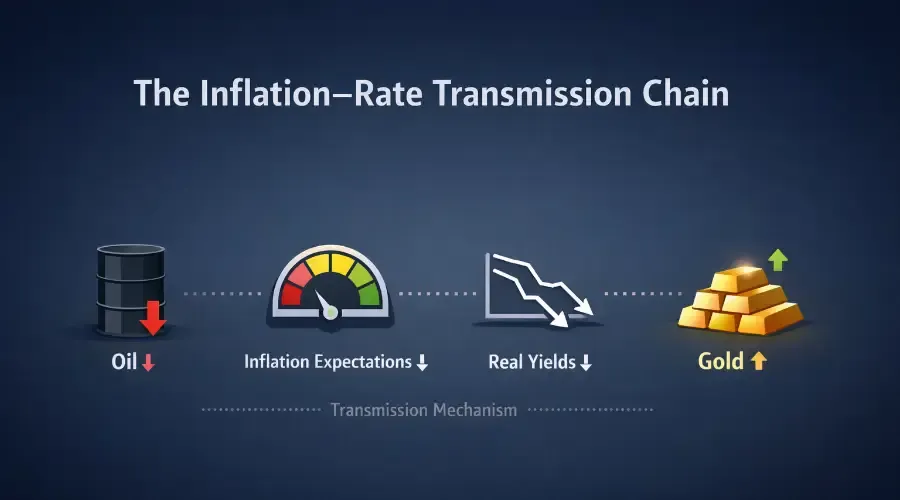
Oil falls → inflation expectations ease → real yields decline → gold becomes more attractive
What changed today was the activation of this sequence in reverse of the prior week. Earlier, rising oil had pushed inflation expectations higher, lifting real yields and pressuring gold. The latest move confirms the symmetry of the relationship. That consistency matters because it reinforces gold’s role as a rate-sensitive asset rather than a purely defensive allocation.
Cross-Asset Context
Other asset classes moved in line with this framework:
Treasury yields moderated briefly as inflation expectations eased.
US Dollar (DXY) softened alongside reduced rate pressure.
Equities continued to reflect broader rate-driven valuation pressure, creating a divergence where gold benefited from falling real yields while stocks remained pressured by still-elevated nominal yields, where term premium and supply concerns dominate.
Oil remains the primary input into inflation expectations, with volatility feeding directly into the rate path debate.
This alignment highlights that gold’s move is not independent; it is part of a broader system where oil influences inflation, inflation shapes yields, and yields drive cross-asset pricing.
Why This Move Is Conditional, Not Structural
Gold’s recovery does not yet represent a structural shift. It is conditional on the persistence of lower oil prices and easing inflation expectations. If oil stabilizes below recent highs, the supportive environment for gold could extend. However, if oil reclaims higher levels, the inflation–rate mechanism would likely reverse, placing renewed pressure on gold. The current environment reinforces a key transition: gold is increasingly driven by real yields rather than by traditional safe-haven demand. This reflects a macro regime where inflation volatility and rate expectations dominate cross-asset relationships.
Structural Takeaway
In practical terms, gold’s direction is now more tightly linked to real yields than to geopolitical risk alone. The key risk is that nominal yields rise faster than inflation expectations fall, which would push real yields higher and weaken gold’s support. This makes gold a conditional hedge, effective when real yields fall but vulnerable when rate pressure dominates.
What to Watch Next
- Whether oil sustains its decline or reverses higher
- Whether real yields continue to moderate or resume their rise
- Whether Fed expectations shift in response to changing inflation inputs
These factors will determine whether gold’s recent strength extends or reverses.
Scenario to Watch
If oil stabilizes below recent highs but Treasury supply keeps nominal yields elevated, real yields may not fall further; they could even rise if nominal yields climb faster than inflation expectations decline. In that case, gold’s support would fade, even with lower oil. That tension between inflation relief and rate pressure is where gold’s conditional role gets tested.
FAQ
Q: Why is gold rising when geopolitical tensions are easing?
A: Gold is rising because easing tensions are lowering oil prices, which reduces inflation expectations. When inflation expectations fall faster than nominal yields, real yields decline, making non-yielding assets like gold more attractive.
Q: Is gold still a reliable safe-haven in 2026?
A: Gold’s role has become conditional. It still attracts safety demand, but its primary driver is now the real yield channel. If a crisis pushes yields higher due to inflation fears, gold may fall. It performs best when stress leads to lower real rates.
Q: How does the inflation–rate transmission chain affect portfolios?
A: The chain (Oil → Inflation → Yields → Gold) means assets are more interconnected. Gold may hedge equities effectively when falling growth lowers yields, but during inflation-driven sell-offs, both gold and equities can decline together.
DISCLAIMER:
This article is for informational and educational purposes only and does not constitute financial, investment, or trading advice. You are solely responsible for your own investment decisions and should consult a licensed financial professional before acting on any information in this post.