
Federal Reserve Intelligence Report - Week Ending March 13, 2026
The Event - What Happened
Event Type: Macro data and geopolitical developments materially shifted Federal Reserve expectations.
Key developments influencing Fed expectations:
-
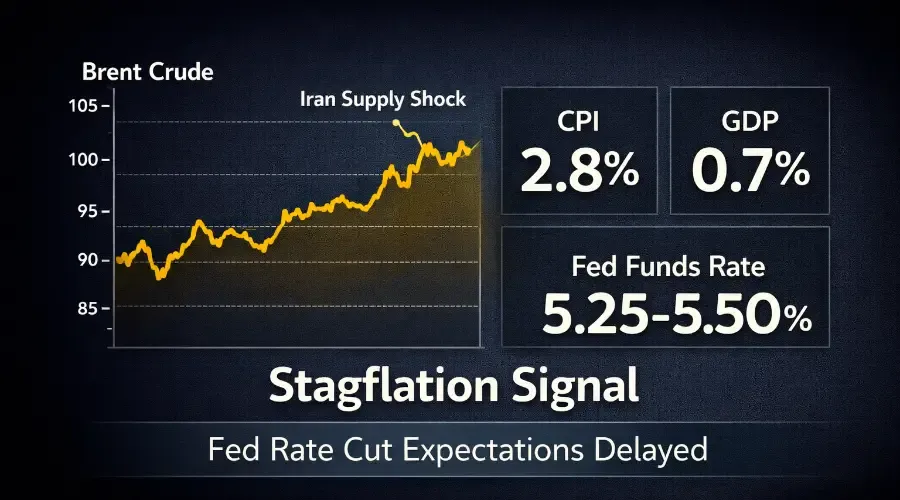
Iran-related oil supply shock pushed crude above $100
-
CPI print showed persistent inflation pressure
-
GDP revision signaled weaker growth
The combined effect produced a stagflation signal, forcing markets to reassess the Fed's ability to cut rates.
Markets interpreted the macro environment as:
-
Inflation still elevated
-
Growth slowing
-
Oil shock amplifying inflation risk
The result: expectations of Fed rate cuts were pushed further out.
Key macro numbers driving the repricing:
-
Headline CPI: Approximately 2.8 percent
-
Core CPI: Approximately 3.1 percent
-
Q4 GDP revised to: 0.7 percent annualized
This combination created a stagflation configuration, where inflation remains elevated while growth slows.
Implication for Fed policy: The Federal Reserve faces a constraint. Cutting rates risks fueling inflation. Holding rates risks worsening the growth slowdown. Markets interpreted this as reduced flexibility for the Fed.
Rate Decision / Expectation
Fed policy rate: No decision released during the week.
Current target range: 5.25 percent to 5.50 percent.
Market interpretation of policy path:
-
Before oil shock narrative intensified: Markets expected multiple cuts in 2026
-
After the week's data and oil surge: Markets reduced conviction in the 2026 cutting cycle
Forward policy interpretation: Markets now believe the Fed may need to maintain "higher for longer" policy if oil-driven inflation persists.
CME FedWatch — Before and After
Next policy move probability:
-
Before oil surge and CPI context: Markets priced meaningful probability of rate cuts beginning in 2026
-
After oil shock and stagflation signal: Probability of early cuts declined sharply
Implied policy path shift: Market repricing suggests fewer total cuts expected. The first cut is potentially delayed. Markets increasingly price persistent restrictive policy until inflation clearly falls again.
Market Reaction
10-Year Treasury Yield:
-
Before week: Approximately 4.10 percent
-
End of week: Approximately 4.25 percent
-
Move: Plus 15 basis points despite weaker growth data
-
Interpretation: Bond markets repriced inflation risk higher, not recession risk
2-Year Treasury Yield:
-
Reaction: Volatile but biased higher as rate-cut expectations declined
-
Interpretation: Front-end yields reflecting delayed Fed easing cycle
S&P 500:
-
Start of week: Approximately 6,800
-
End of week: Approximately 6,767
-
Third consecutive weekly decline
-
Interpretation: Equities repricing higher discount rates rather than earnings deterioration
US Dollar (DXY):
-
Direction: Strengthened modestly
-
Drivers: Safe-haven demand, reduced rate-cut expectations, oil-dollar correlation
Gold:
-
Behavior: Fell early week, found support near $5,000, rebounded into the close
-
Interpretation: Gold acting as inflation hedge rather than panic hedge
Key Phrases to Decode
"Stagflation signal"
-
Fed-speak meaning: Simultaneous inflation pressure and slowing growth
-
Plain English: The Fed cannot easily cut rates without risking inflation
"Oil passthrough into CPI"
-
Fed meaning: Higher energy prices feeding into broader inflation
-
Plain English: Gasoline and energy costs will push inflation higher
"Higher for longer"
-
Fed meaning: Rates remain restrictive longer than expected
-
Plain English: Rate cuts may not arrive soon
"Repricing the discount rate"
-
Market meaning: Investors recalculating valuations because rates stay high
-
Plain English: Higher interest rates reduce stock valuations
"Dual mandate conflict"
-
Fed meaning: Employment and inflation goals moving in opposite directions
-
Plain English: The Fed cannot fix both problems at the same time
What Changed vs Last Time
Previous narrative: Inflation declining, growth stable, Fed cuts expected
New narrative after the week: Oil shock introduces new inflation risk, growth slowing, Fed may delay easing cycle
Key structural shift: Markets moved from "rate cuts coming" to "cuts uncertain"
Analyst / Market Interpretation
Macro interpretation across markets: Economists broadly describe the environment as a stagflation setup.
Key features cited:
-
Oil supply shock
-
Persistent core inflation
-
Slowing GDP growth
Analysts note the unusual cross-asset signal: Equities falling while bond yields rise simultaneously. This configuration typically indicates an inflation-shock regime rather than recession.
Market strategists emphasize that the next decisive signal will come from:
-
Oil prices
-
Future CPI data
-
Geopolitical developments in Iran
Strategic Takeaway
The macro structure emerging is clear:
Oil shock → inflation risk → delayed Fed cuts → higher yields → equity valuation pressure
Until oil prices retreat or CPI declines materially, markets will likely assume the Fed remains constrained and cautious.
The market is now watching three signals: Will oil hold above $100? Will next month's CPI confirm the passthrough? Will Iran de-escalate? Which signal matters most to your positioning?
DISCLAIMER:
This article is for informational and educational purposes only and does not constitute financial, investment, or trading advice. You are solely responsible for your own investment decisions and should consult a licensed financial professional before acting on any information in this post.